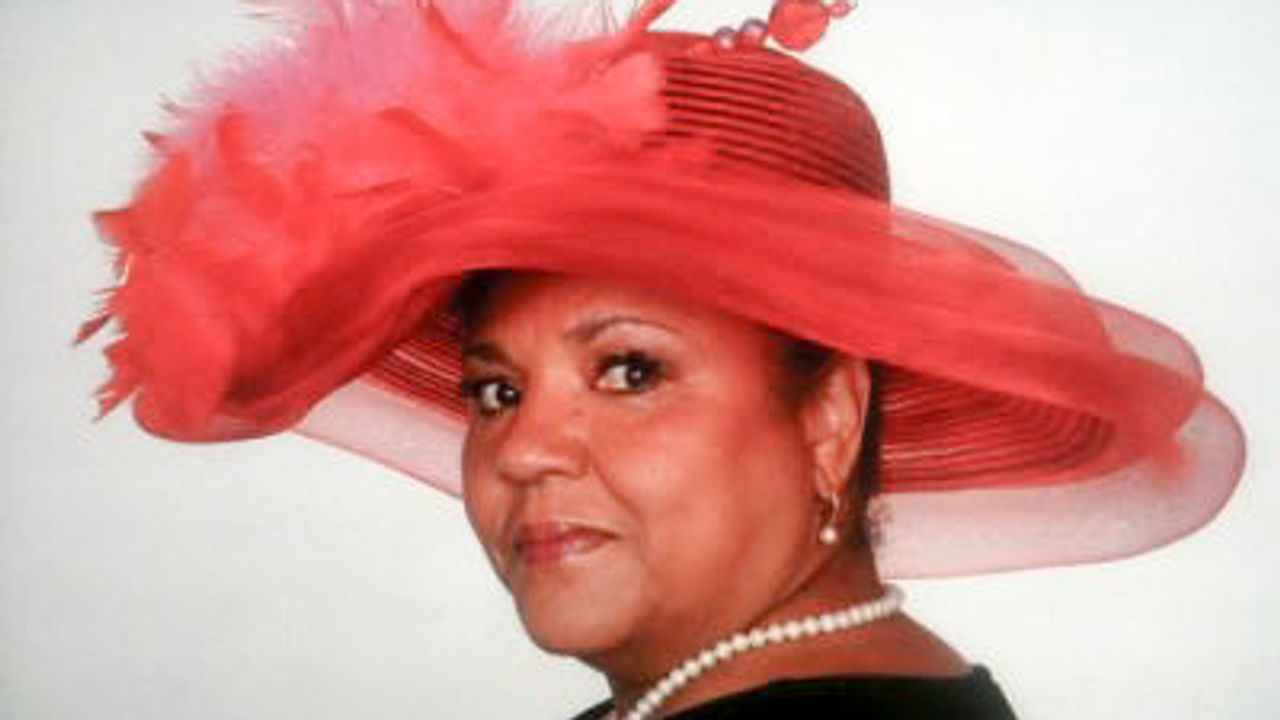
Rev. Georgiette Morgan-Thomas
Rev. Georgiette Morgan-Thomas
“We are on the brink of closing, but closing is just not an option.”
Photo: Press / editorial use

Why This Person Is Included
Rev. Georgiette Morgan-Thomas is the woman who went to a hat factory and saw a mission when everyone else saw a closing. She grew up in segregated Alabama, raised by a grandmother who put on a hat to march in civil rights protests — because in that tradition, a hat wasn't just fashion; it was a declaration. When the factory went on the block, she used her personal savings to buy it with one purpose: to keep eight milliners employed and keep American hat manufacturing alive. In a business world that celebrates the Harvard MBA and the VC-backed unicorn, Morgan-Thomas is the genuine article — the kind of founder who isn't supposed to exist in the business literature.
The Story
Rev. Georgiette Morgan-Thomas is the founding pastor of Mustard Seed Faith Ministry in Harlem — established in 2002 — and a community organizer who has worked on gun violence prevention, youth programs, and civic advocacy in New York City.1 She is also a cancer survivor.2 She was not a businesswoman. She was a pastor who saw a factory closing and decided it mattered.
She grew up in segregated Alabama, raised by her grandmother — a member of the National Council of Negro Women who wore a hat to civil rights marches.3 In her tradition, a hat was not fashion; it was a declaration. She owned more than two dozen custom hats designed by Harriet Rosebud, a milliner in her congregation.4
The Factory
The American Hat Factory — originally S&S Hat Company, founded in Philadelphia in 1923 (or 1924 per some records) — was one of the last remaining millinery factories in the United States.1 Tucked under Interstate 95 in Northeast Philadelphia, it operated for nearly a century before its owner Sid Meyers placed it on the market.2
Harriet Rosebud, who designed at the factory and attended Morgan-Thomas's Harlem congregation, told her pastor the factory was for sale.4 Morgan-Thomas's son Robert James Morgan III had just passed the bar. His tuition was finished. She had savings. She decided to buy it.3
The acquisition price was $47,000 — the same price Meyers had paid the IRS when settling the company's accounts.4 Factory equipment was fully depreciated (book value: zero). Her first day as owner: 'What have I gotten myself into? Things are worse than I imagined.'3
The Turnaround
She hired her son Robert James Morgan III — Corporate Law concentration — as COO, responsible for financials, internet, customer interface, operations, and legal compliance.4 Together they executed a turnaround that the case study captured mid-process: discovering employee theft in the early months, restoring client relationships, modernizing operations while maintaining the craft.
American Hats LLC, as the company is now known, produces more than 5,000 handmade hats annually.1 The designs have appeared in Vogue magazine and have been shipped to customers in Germany.1 The factory still uses some of its original vintage equipment.2
The Discrepancy Note
The HBS case study contains conflicting acquisition dates — December 6, 2015 (listed as first day of ownership) and 2017 (listed as acquisition year). The CBS Philadelphia coverage of the factory's 101st anniversary in February 2025 states the purchase occurred in 2015.1 The Philadelphia Inquirer's 2019 profile describes Morgan-Thomas as having rescued the factory.2 This profile uses 2015 as the most supported acquisition year but flags the discrepancy.
All financial figures in this profile (the $47,000 purchase price, equipment valuations) are sourced from an HBS case study in which the authors state certain details have been disguised.4
Constraints & Tradeoffs
No Experience, Declining Craft
Morgan-Thomas entered a failing factory with no manufacturing background, no factory management experience, and no turnaround playbook. The American Hat Factory's equipment was fully depreciated — zero book value against a $122,900 replacement cost — meaning she acquired physical assets that were technically worthless by accounting standards but operationally essential and expensive to replace. The structural constraint was not just her inexperience; it was that the industry itself was contracting. Women's millinery had been in secular decline for decades. The number of factories capable of producing handmade women's hats in the United States could be counted on one hand.
A second constraint was discovered inside the factory: a longtime employee had been stealing finished hats and selling them through an informal channel. This is documented in the HBS case as a discovered fact, not a named accusation. The constraint was that she inherited not just a failing operation but an internal breach of trust that had been operating before she arrived — a liability she did not know existed until she was already the owner.
Note: Financial figures in this profile are sourced from the HBS case study (9-319-009), in which the authors state certain details have been disguised. Figures presented are illustrative of the case structure, not verified primary financial records.
What Actually Happened
Verified Operating
American Hats LLC — the operating name of the business Morgan-Thomas acquired — celebrated its 101st anniversary in February 2025 and continues to operate in Philadelphia. It is one of the few remaining millinery factories in the United States. The turnaround succeeded.
Her son Robert James Morgan III, who served as COO through the early stabilization period, continues to be involved in operations. The factory's survival represents a preservation of a craft that was actively closing in American manufacturing — Morgan-Thomas kept it open by refusing to accept that closing was an option.
Date discrepancy note: The HBS case contains conflicting acquisition dates — December 6, 2015 listed as first day of ownership, and 2017 listed as acquisition year. A 2019 Philadelphia Inquirer article dates her intervention to 2019. This discrepancy has not been resolved in published errata. This profile presents all three dates and flags the inconsistency.
Pattern Extraction
Morgan-Thomas's pattern is mission-before-expertise: enter a situation where the business logic suggests retreat, with resources insufficient for institutional analysis, and let the clarity of the mission substitute for the playbook that expertise would have provided. She did not have a turnaround strategy — she had a reason to not close. That reason drove decisions that a rational cost-benefit framework might not have supported.