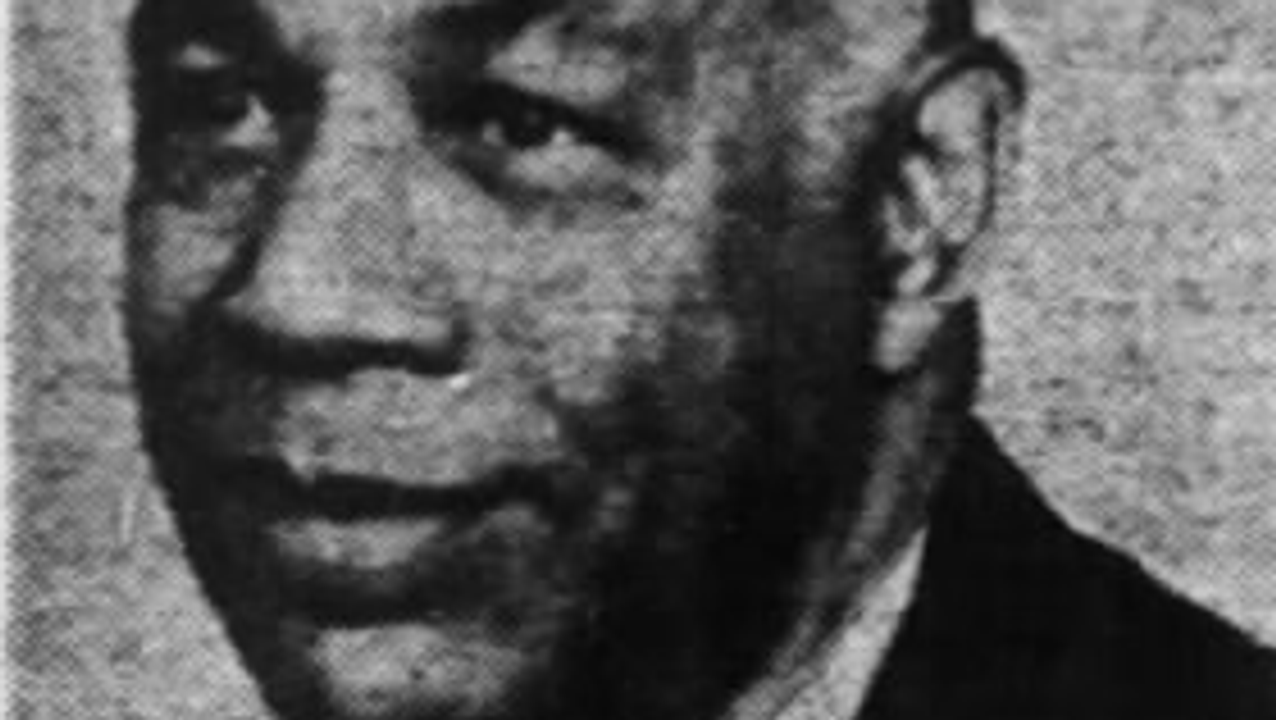
Victor Hugo Green
Postal worker, publisher, and creator of The Negro Motorist Green Book
Photo: Alfredo Graham / The New York Age, August 23, 1958 / Public Domain

Why This Person Is Included
Victor Hugo Green published The Negro Motorist Green Book for thirty years — from 1936 to 1966. The guide became essential for Black American travelers navigating Jim Crow, identifying safe hotels, restaurants, and service stations across the country. The 2018 film that bears its name made the Green Book famous. Green himself — the Harlem postal worker who created it, whose wife Alma edited it, who printed 15,000 copies a year and sold them at Esso stations — remains largely uncelebrated outside specialist historians.
Historical Significance
Green's innovation was distribution infrastructure for safety information — a routing system for human dignity. He transformed the existential problem of Black automobile travel under Jim Crow into a solvable logistics problem, then built a 30-year publishing enterprise to solve it. The Green Book is remembered as an artifact of that era. Green is remembered, when he is remembered at all, as its incidental author.
The Story
Victor Hugo Green was born in Manhattan on November 9, 1892, named for the French author. He trained with the United States Postal Service in 1913, delivered letters in the Harlem neighborhood, and spent the early part of his career as a letter carrier — a profession that, for Black Americans at the time, represented hard-won access to federal employment and a stable income that the private sector routinely denied them.
After marrying Alma Duke and settling in Harlem, Green began traveling south to visit her family in Virginia. The experience of driving while Black in the 1930s — the constant uncertainty about which restaurants would serve you, which hotels would house you, which gas stations would fill your tank, and which towns would simply not tolerate your presence after dark — became the problem he decided to solve.
The Green Book (1936)
Green was inspired partly by the Jewish Vacation Guide, a directory that Jewish Americans used to navigate antisemitism while traveling. He applied the same concept to the Black American experience. In 1936, he compiled a list of establishments in the New York metropolitan area that accepted Black travelers and published the first edition of The Negro Motorist Green Book.
It was immediately popular. Green expanded coverage nationwide the following year, and each subsequent edition added more cities, more categories, and more years of crowd-sourced intelligence about where Black Americans could exist safely while driving. Alma Green served as editor for several years. Green printed approximately 15,000 copies annually and distributed them through Esso service stations, which had a network of Black-owned franchisees positioned along the routes Black travelers drove.
The guide continued publication after Green's death in 1960, running through 1966 — two years after the Civil Rights Act of 1964 formally outlawed the segregation practices that had made the guide necessary. The last edition is sometimes read as an acknowledgment that the laws had changed; the reality, as Green's readers knew, was more complicated.
The Man Behind the Book
Victor Hugo Green maintained his career as a postal worker throughout his life. He ran his publishing operation from Harlem, built a mailing list of subscribers, and expanded the guide's scope gradually through reader contributions and his own research network. He died on October 16, 1960, at the age of 67 — before the Civil Rights Act, before the movement's greatest victories, and before anyone would have thought to ask whether his book might one day become a film. His name did not appear prominently in that film's promotional materials.