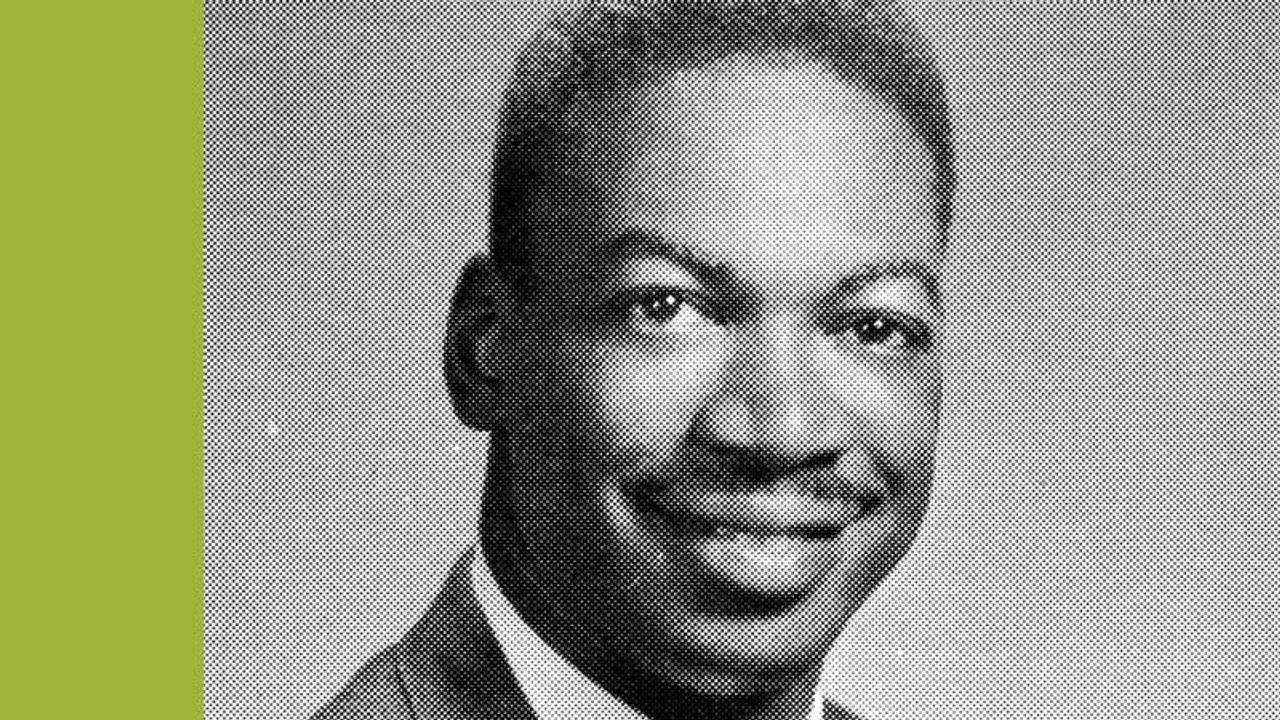

Why This Person Is Included
Otis Gates is extraordinary: one of twelve Black Harvard undergraduates in a class of 1,200 in the 1950s; one of the only Black HBS graduates in 1963; one of the first two Black Accenture partners; co-founder of the Bay State Banner newspaper in 1965; founder of a profitable affordable housing management firm in Boston at age 67. Yet virtually unknown outside Boston. Some financial details in this profile are drawn from sources in which certain figures have been disguised; they are illustrative of scale, not verified primary data.
The Story
From his bedroom window in Boston's Dorchester neighborhood, Otis Gates could see the housing complex he would one day own.1 His father was a Pullman Porter — part of the Brotherhood of Sleeping Car Porters, organized under Asa Philip Randolph in 1937.1
Gates entered Harvard College in 1952 as one of approximately twelve Black students in a class of 1,200.1 He graduated before Brown v. Board of Education was decided, before the Civil Rights Act, and before the voting rights movement had produced its greatest legal victories. He then served in the Air Force, posted to Grissom Air Force Base in Indiana — a state with one of the densest concentrations of KKK membership in the country.1 He spent his service years afraid to walk off base after dark, fleeing to Detroit and Chicago on weekends.1
Harvard Business School (1961–1963)
Gates enrolled at Harvard Business School in 1961 and graduated in 1963 as the only Black student in his class of more than 600.1 He was HBS Class of 1963. He entered the program months after Freedom Riders were firebombed in Alabama and graduated months before the March on Washington.
His career spanned technology, management consulting, and corporate leadership. He was one of the first two Black partners at Accenture — then Andersen Consulting.1
United Housing Management (2003)
At 67 years old, Gates co-founded United Housing Management with seven equal partners.1 The company managed affordable housing properties in predominantly Black Boston neighborhoods — the same neighborhoods Gates had grown up in, the housing complexes visible from his childhood bedroom. The company ran a Freedom School reading program for local children, at a cost of thousands of dollars annually that no other Boston affordable housing firm had funded.1
By 2017, when he was approximately 80 years old, Gates and his partners were evaluating retirement and a sale.1 The central question was whether to prioritize financial return for the partners or preservation of the social mission — and whether both could be achieved in a single transaction.1
A Note on Financial Data
Some financial figures in this profile — revenues, property valuations, return estimates — are drawn from sources in which certain details have been disguised. These figures are illustrative of the scale and structure of the business, not verified primary financial data.
Constraints & Tradeoffs
The Collateral Gap and the History
Otis Gates was one of twelve Black students in a Harvard College class of 1,200 in 1952. He graduated from HBS in 1963 as the only Black student in his class of more than 600. He spent his Air Force posting in Grissom, Indiana — KKK territory — too afraid to leave the base after dark. He was one of the first two Black partners at Accenture. Each of these facts describes a specific institutional constraint that he navigated by being exceptional enough to be permitted through the door, then exceptional enough to stay. The structural constraint was not individual discrimination at specific junctures — it was a system that required him to perform at a higher standard at every juncture while having access to fewer supporting resources.
The United Housing constraint at the sale stage was different: a social enterprise making a financial exit. The eight co-equal partners had to agree on whether the financial return and the mission preservation could both be achieved in a single transaction. Social enterprises that reach exit stage face a structural problem the commercial market does not: their value includes non-financial components (tenant welfare, community relationships, Freedom School programs) that do not appear in any balance sheet but would be destroyed by an acquirer optimizing purely for financial return.
All financial figures in this profile are sourced from HBS Case 9-317-059, in which the authors state certain details have been disguised.
What Actually Happened
Current Status Unverified
Otis Gates was approximately 81 years old at the time of the HBS case study in 2017. He would be approximately 90 years old as of 2026. His current status and the current operating status of United Housing have not been independently verified. This profile is written to reflect the documented record through 2017.
The case ends at the deliberation stage — Gates and his seven co-equal partners are evaluating retirement and sale options. Whether a sale occurred, at what price, to whom, and on what terms regarding mission preservation is not documented in publicly available sources as of this writing.
If you have current information about Otis Gates or United Housing, the platform invites you to contact us. The absence of a documented outcome is itself a data point about how the stories of people like Gates — Black executives who built significant institutions without building public profiles — disappear from the record.
Pattern Extraction
Gates's pattern is the long horizon: six decades of career-building that made it possible to start a company at 67, in a neighborhood he could see from his childhood bedroom, and run it profitably for fifteen years. The compounding of credentials, network, and saved capital over a lifetime of navigating exclusion created the conditions for his most meaningful entrepreneurial act at an age when most people have already retired.
Frequently Asked Questions
- What was Otis Gates's highest level of education? ▾
- Otis Gates earned an MBA from Harvard Business School, graduating in 1963 as the only Black student in his class of more than 600. He had previously attended Harvard College beginning in 1952.
- What is Otis Gates's net worth? ▾
- No independently verified net worth figure is publicly available for Otis Gates.
- Did Otis Gates co-found the Bay State Banner? ▾
- Yes. Gates co-founded the Bay State Banner — Boston's Black community newspaper — in 1965 with Melvin Miller. Miller confirmed this in his farewell column when ownership transferred in March 2023: 'I launched the Banner in 1965 with a Roxbury classmate, Otis Gates, after President Lyndon Johnson signed the 1964 Civil Rights Act.' The Banner continues publishing as of 2026.
- What happened to United Housing Management after Gates retired? ▾
- Gates did not sell United Housing Management to an outside buyer. Kevin Bynoe, a founding partner who had served as Senior Portfolio Manager, became CEO. The company — now operating as UHM Properties — continues to manage approximately 1,400 affordable housing units in Boston and generates roughly $17.4 million in annual revenue. The Freedom School program, which began with 25 children, grew to serve 200 children and became the first Children's Defense Fund Freedom Schools affiliate in Boston in 2015.
- What role did Otis Gates play at Accenture? ▾
- Gates was one of the first two Black partners at the firm then known as Andersen Consulting, now Accenture. He reached that position after a career spanning technology and management consulting that followed his 1963 HBS graduation.