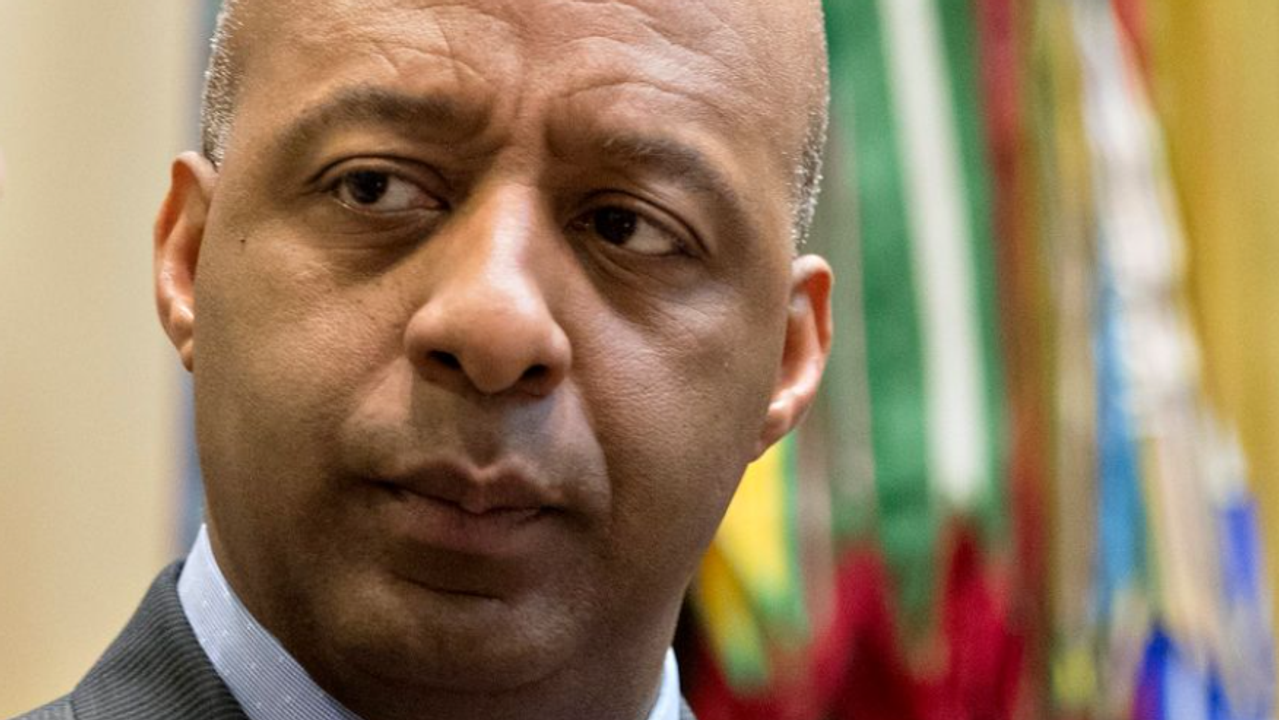
Marvin Ellison
Marvin Ellison (paraphrase)
“I never had the luxury of waiting for opportunities to be handed to me. I had to create my own path.”

Why This Person Is Included
Marvin Ellison became CEO of Lowe's in 2018 and oversaw a turnaround that improved the company's financial performance significantly against its primary competitor Home Depot. He is among a very small number of Black CEOs of Fortune 500 companies with more than $50 billion in revenue. His name is known in Black business circles. His operational record — the decisions that drove the turnaround — is the curriculum, not the recognition.
The Story
Marvin Ellison grew up in Haywood County, Tennessee, and built his retail career through a series of operational roles: loss prevention at Target, executive positions at Home Depot spanning more than a decade, and eventually CEO of JCPenney — the first Black CEO in JCPenney's history — from 2015 to 2018.1
At JCPenney, Ellison attempted a significant operational turnaround under difficult financial conditions. The company ultimately filed for bankruptcy in May 2020 during the COVID-19 pandemic, after Ellison had already departed in May 2018 to join Lowe's.1
Lowe's CEO (May 2018)
Ellison became President and CEO of Lowe's Companies in May 2018.2 He inherited a company significantly underperforming its primary competitor Home Depot on key operational metrics — particularly in the professional contractor segment that Home Depot had developed more effectively. His turnaround strategy focused on supply chain efficiency, inventory simplification, and investment in professional contractor customers.2
In fiscal year 2022, Lowe's delivered revenue of approximately $97.1 billion, representing the peak of a COVID-era home improvement boom.2 By fiscal year 2024, revenue had declined to approximately $83.7 billion as the post-pandemic housing market normalized.2 The company continued to improve operating margins and return capital to shareholders through the period.
Constraints & Tradeoffs
Ellison's constraint at Lowe's was the persistent performance gap versus Home Depot — a gap that had accumulated over years of operational decisions that his predecessors had made. Home Depot had invested more heavily in the professional contractor segment (plumbers, contractors, builders) which generates higher-volume, higher-margin purchases than the consumer DIY segment. Lowe's had underinvested in that segment. Reversing the gap required rebuilding the supply chain, retraining the salesforce, and investing capital at a scale that would only show returns over a multi-year horizon — during which Wall Street would continue comparing quarterly results to a competitor that was already ahead.
A second constraint is structural to Black CEOs of major public companies: the scrutiny applied to executive performance is documented to be more intense when the executive is Black, and the tolerance for the transition period required by a multi-year operational turnaround is shorter. Ellison navigated both: delivering enough near-term results to maintain board confidence while executing the longer-term operational restructuring.
What Actually Happened
Lowe's Operational Turnaround Documented
Under Ellison's leadership from 2018, Lowe's revenue grew from approximately $68 billion to more than $90 billion by fiscal 2022. Operating margins improved significantly. The company's stock outperformed the broader retail market during his initial tenure. The professional contractor segment investment — the strategic change most directly tied to closing the Home Depot performance gap — has shown measurable results in contractor customer acquisition and average transaction size.
Ellison has continued as CEO and has been a consistent public advocate for increasing Black representation at the CEO level in Fortune 500 companies. He has spoken about his own path — beginning in loss prevention and working through executive roles — as a replicable model for Black professionals in retail who aspire to leadership.
Pattern Extraction
Ellison's pattern is the operational proof: enter a CEO role inheriting a performance gap versus a dominant competitor, identify the specific operational decisions that created the gap, execute the changes at scale, and let the financial results make the case that could not be made by argument alone. The pattern requires accepting the constraint that results will lag the decisions by eighteen to thirty-six months, and building stakeholder tolerance for that lag.
Frequently Asked Questions
- What was Marvin Ellison's highest level of education? ▾
- Marvin Ellison's educational background is not detailed in his public record. He has spoken publicly about growing up in Haywood County, Tennessee, and building his career through operational roles rather than an academic path into retail leadership. ⚠ VERIFY: Confirm degree(s), institution(s), and year(s) before publishing.
- What is Marvin Ellison's net worth? ▾
- No independently verified net worth figure is publicly available for Marvin Ellison.
- When did Marvin Ellison become CEO of Lowe's? ▾
- Ellison became President and CEO of Lowe's Companies in May 2018, joining from JCPenney where he had served as CEO since 2015.
- What was the operating margin gap between Lowe's and Home Depot when Ellison took over? ▾
- In fiscal year 2018, Lowe's adjusted operating margin was approximately 8.6 percent compared to Home Depot's 14.4 percent — a gap of roughly 580 basis points. Closing that gap became the central objective of Ellison's turnaround strategy.
- What was Lowe's peak revenue under Marvin Ellison's leadership? ▾
- Lowe's delivered revenue of approximately $97.1 billion in fiscal year 2022, the peak of a COVID-era home improvement demand surge. By fiscal year 2024, revenue had declined to approximately $83.7 billion as the post-pandemic housing market normalized.