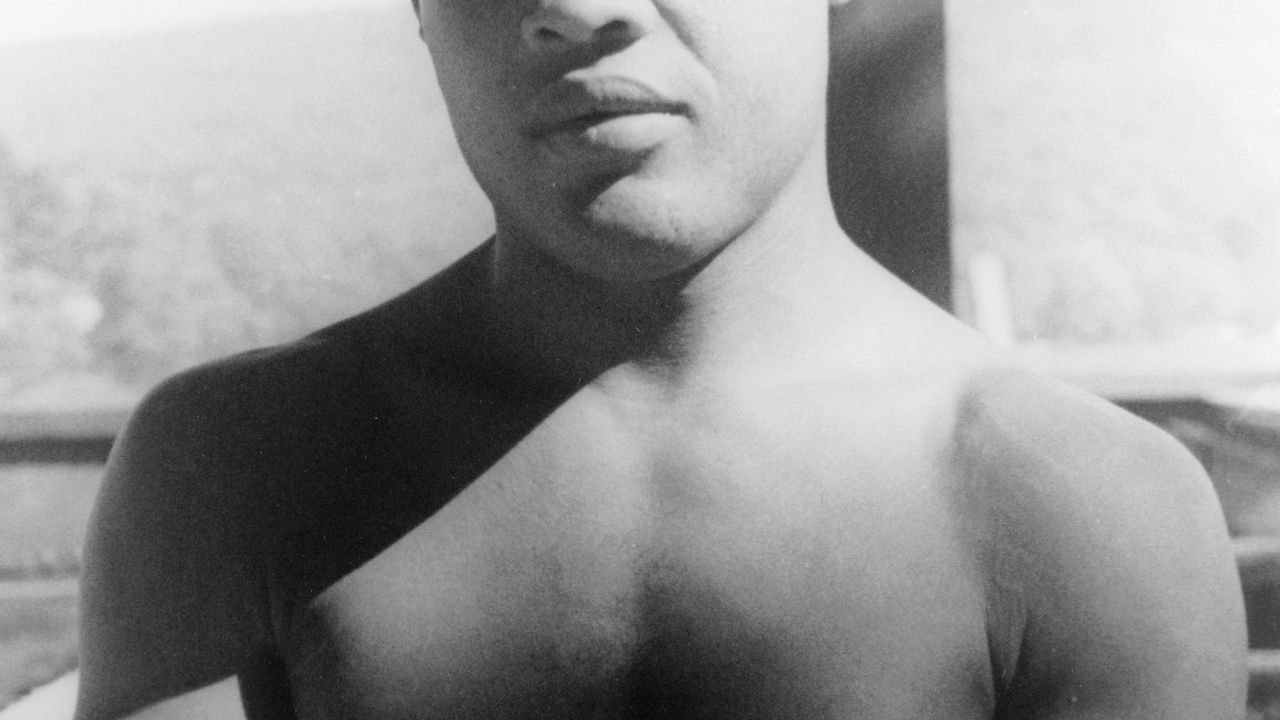
Joe Louis and the Black Cadillac Buyers
The story of how Black consumers circumvented Cadillac's racial exclusion policy in the 1930s
Photo: Carl Van Vechten / Library of Congress, Prints and Photographs Division / Public Domain

Why This Person Is Included
The Black consumers who purchased Cadillacs through white intermediaries in the 1930s — when Cadillac's official policy excluded them from its showrooms — are the invisible protagonists of one of the most cited stories in the management curriculum. Nicholas Dreystadt gets the credit for 'discovering' this market. The Black buyers who created that market by working around the exclusion — including Joe Louis, who became a Cadillac symbol — are the entrepreneurial actors whose market workaround the curriculum actually celebrates without naming them.
Historical Significance
The Cadillac story is taught as a lesson in market segmentation and intrapreneurship. But it is equally a lesson in consumer resistance: Black buyers identified a way around a system designed to exclude them and used it at sufficient scale to make the exclusion visible and expensive for the company. Market workarounds by excluded consumers are a form of market-making that the curriculum rarely frames as entrepreneurship. This spotlight frames it that way.
The Story
In the early 1930s, Cadillac — like most major American consumer brands — maintained a policy of racial exclusion. Black customers were not welcome in Cadillac showrooms. The company did not explicitly advertise this policy; it simply did not serve them.
Black buyers who wanted Cadillacs found a workaround: they paid white intermediaries to purchase the cars on their behalf and resell them at a markup. This was economically inefficient — the markup was pure friction cost from a racist exclusion policy — but it worked. Black buyers got the cars. The intermediaries got a profit. Cadillac remained ignorant of a significant and loyal customer segment.
Joe Louis and the Cadillac Symbol
Joe Louis — the Brown Bomber, heavyweight champion of the world from 1937 to 1949 — became a symbol of this pattern. Louis drove a Cadillac. Black Americans aspired to Cadillacs in part because Louis drove one. Louis was the most famous Black man in America during his championship years, and his consumer choices were cultural signals that cascaded through Black communities nationwide. The brand he chose — which had excluded him — benefited enormously from his visibility.
Nicholas Dreystadt is the person who discovered, during a 1932 board meeting, that a significant percentage of Cadillac owners were Black — despite Cadillac's policy of not selling to Black buyers. He presented data showing that Black buyers accounted for a disproportionate share of the market they had been excluded from, and he persuaded GM to reverse the exclusion policy. Cadillac sales increased dramatically. Dreystadt gets the credit. The Black consumers who built the market he presented do not have names in the standard telling of the story.
The curriculum cites Peter Drucker's account of this story in 'The Practice of Management' (1954) and Cadillac's 70% sales increase by the end of 1934. What Drucker's account emphasizes — and what this platform also emphasizes — is not just what Dreystadt did, but what the Black consumers had already done: they identified a luxury product that conferred status, built a consumer market for it through an informal resale network, and maintained that market at scale despite the price premium imposed by the intermediary system. That is market-making. It deserves to be called what it is.
Constraints & Tradeoffs
The Black consumers who purchased Cadillacs through white intermediaries in the 1930s were paying a structural premium — the markup imposed by the intermediary — as the direct cost of racial market exclusion. They were paying more than white buyers for the same product because the company refused to serve them directly. The constraint was structural to their market position: participating in the luxury automobile market at all required accepting the additional cost that racial exclusion imposed. The intermediary price was the discrimination tax made concrete.
What Actually Happened
Nicholas Dreystadt discovered in 1932 that a significant percentage of Cadillac owners were Black, despite the company's policy against selling to Black buyers. He presented the data at a GM board meeting and persuaded the company to reverse its exclusion policy. Per Peter Drucker's account in 'The Practice of Management' (1954), Cadillac sales increased approximately 70% by the end of 1934 after the policy reversal, with the division reaching breakeven. Joe Louis became a significant Cadillac symbol during his championship years (1937-1949), demonstrating the brand's cultural resonance in Black communities that Dreystadt had identified.
Pattern Extraction
The Black Cadillac buyers' pattern is the consumer workaround as market proof: when a market systematically excludes you, find a way to participate in that market anyway, demonstrate your purchasing power through the workaround, and create the data that makes the exclusion visible and expensive for the company. The workaround is not just a way to get the product — it is the evidence that makes the market's existence undeniable to the company that excluded you.
Frequently Asked Questions
- What was Joe Louis's highest level of education? ▾
- Joe Louis left school as a teenager to work and begin boxing training. He did not attend college. His formal schooling ended at the secondary level in Detroit, where his family had relocated from rural Alabama during his childhood.
- What is Joe Louis's net worth? ▾
- Joe Louis died in 1981 with significant IRS debt — estimates of what he owed the federal government in back taxes reached into the hundreds of thousands of dollars by the time of his death. No independently verified net worth figure is available for him as a historical figure; he ended his life in financially precarious circumstances despite having earned millions during his boxing career.
- How did Black buyers purchase Cadillacs before the 1932 policy change? ▾
- Black Americans who wanted Cadillacs in the years before 1932 could not walk into most Cadillac dealerships and be served. The documented workaround was to pay a white person — a friend, employer, manager, or paid associate — to conduct the purchase on their behalf. Peter Drucker, writing in Adventures of a Bystander (1979), described buyers paying "a substantial premium to a white man to front for him." Contemporary accounts place the premium at several hundred dollars per transaction. The arrangement was ad hoc and personal, not a formalized market.
- Did Nicholas Dreystadt's 1932 reform end discrimination at Cadillac dealerships? ▾
- Dreystadt's intervention removed Cadillac's corporate-level prohibition on selling to Black customers and led to advertising in Black newspapers such as the Chicago Defender and Amsterdam News. It did not end discrimination at the dealer level. Individual dealerships — particularly in the South — retained discretion over their own showrooms and continued exclusionary practices without consequence from the corporation. Active corporate outreach to Black customers did not begin until a formal diversity-marketing program in 1995. As late as the 1960s, Black buyers in some markets still could not purchase from local Cadillac dealers and had to find workarounds.
- Is there documented proof that Joe Louis specifically used a white proxy to buy a Cadillac? ▾
- No primary source documents Joe Louis personally using a white intermediary to purchase a Cadillac. Peter Drucker's original account in Adventures of a Bystander describes the category — 'black entertainers, black boxers, black doctors, black realtors' — without naming Louis. Louis's name appears in later retellings without traceable primary documentation. Biographies of Louis, including Randy Roberts's Joe Louis: Hard Times Man (Yale, 2010), and institutional sources at the Smithsonian and NMAAHC do not record a specific proxy Cadillac purchase. Louis is associated with this story because he was the most prominent Black boxer of the era and fit the profile Drucker described; he is a representative figure, not a documented individual case.
Sources
- 1.Drucker, Peter F. 'The Practice of Management.' Harper & Row, 1954.↗