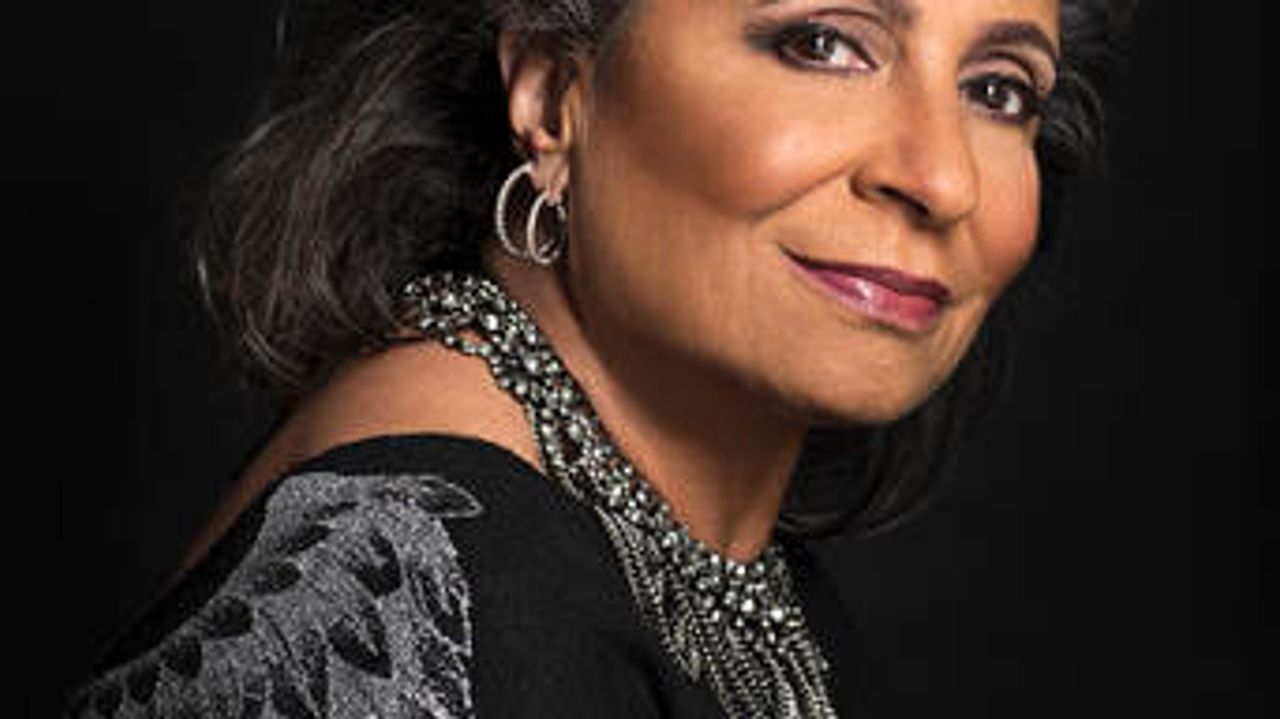
Cathy Hughes
Cathy Hughes
“I was told that Black people didn't want to talk radio. They told me Black people wanted to be entertained, not educated.”
Photo: Unknown / Howard University Communications (2017) / Press / editorial use

Why This Person Is Included
Cathy Hughes is known in Black culture as Radio One. What is less known is the specific business architecture — the breakeven formula, the pivot to 24-hour Black talk radio, the decision to live at the radio station during the turnaround period, and the sustained operational discipline that made profitable what everyone said could not be. The brand is known. The business is the curriculum.
The Story
Catharine Liggins Hughes was born in Omaha, Nebraska, in 1947.1 She began her career in radio while in her twenties, developing the 'Quiet Storm' late-night radio format at Howard University's WHUR-FM in Washington, D.C. — a format that became one of the most widely imitated in American radio.1
Between 1978 and 1980, Hughes approached thirty-two banks for financing to acquire WOL-AM, a Washington, D.C. radio station.2 Thirty-two said no. The pattern of rejection — against a single Black woman with a young son, proposing an innovative format — was consistent. Chemical Bank said yes: a $500,000 loan that allowed the 1980 acquisition.2
The Turnaround
WOL-AM was losing money. Hughes moved into the station with her son Alfred to eliminate housing costs.2 She rebuilt the format around 24-hour Black talk radio — a format the industry considered economically unviable — and hosted the morning show herself.2 She applied the breakeven formula precisely: fixed costs divided by contribution per unit identified the monthly revenue required.2 She reached breakeven in seven years.
Radio One expanded through acquisition across the 1990s, reaching 66 stations by 2001.3 In 1999, Radio One listed on NASDAQ's National Market — Hughes became the first Black woman to head a publicly traded U.S. company.3 Her son Alfred Liggins III serves as CEO.3 The company was rebranded Urban One in 2017 to reflect its expanded portfolio: TV One cable network, Interactive One digital media, and Reach Media syndication.3
Constraints & Tradeoffs
32 Banks and the Bias Behind the No
Hughes was a single Black woman with a young son, proposing to acquire a struggling radio station with an innovative format that had no precedent. The thirty-two bank rejections were not random. They reflected a compound institutional bias: against Black borrowers, against women borrowers, against single parents, and against formats that deviated from tested programming models. No single rejection said any of those things explicitly. The aggregate pattern said all of them.
A second constraint was the time horizon of the turnaround. Radio stations require consistent programming and consistent audience-building — neither happens quickly. Hughes had to sustain the operation through seven years of losses before reaching breakeven. That required not just capital discipline but personal sacrifice: she moved into the station with her son Alfred to eliminate the cost of separate housing, living in the studio rather than paying rent elsewhere. The turnaround required total commitment to the operation as the constraint.
What Actually Happened
Urban One — Public Company
Radio One went public in 1999 on NASDAQ's National Market — Hughes became the first Black woman to head a publicly traded U.S. company. The company expanded aggressively through acquisition, reaching 66 radio stations by 2001. It was rebranded as Urban One in 2017 to reflect its expanded portfolio: TV One cable network, Interactive One digital media platform, and Reach Media syndication.
Hughes's son Alfred Liggins III has served as CEO of Urban One since 1997. Hughes stepped back from day-to-day operations while remaining involved as founder and chairperson. Urban One remains publicly traded and is one of the largest Black-owned media companies in the United States. WOL-AM, the station Hughes acquired after 32 bank rejections, continues to broadcast from Washington, D.C.
Pattern Extraction
Hughes's pattern is the breakeven discipline: model the exact revenue required to cover fixed costs, then build every programming and operational decision around reaching that number. She knew the formula — fixed costs divided by (price minus variable cost) equals breakeven units — and she operated the station as a math problem, not a creative one, until the math was solved. The creative came after the economics were stable.
Frequently Asked Questions
- What was Cathy Hughes's highest level of education? ▾
- Cathy Hughes attended Howard University in Washington, D.C., where she worked in the radio department and became general manager of WHUR-FM. No completed college degree is documented in publicly available sources; her career was built through professional advancement in broadcasting.
- What is Cathy Hughes's net worth? ▾
- No independently verified net worth figure is publicly available for Cathy Hughes.
- How many banks rejected Cathy Hughes before she secured financing for WOL-AM? ▾
- Thirty-two banks rejected Hughes's application for financing before Chemical Bank approved a $500,000 loan, enabling her to acquire WOL-AM in Washington, D.C. in 1980.
- What was the significance of Radio One's 1999 NASDAQ listing? ▾
- When Radio One listed on NASDAQ's National Market in 1999, Cathy Hughes became the first Black woman to chair a publicly traded company in the United States. The IPO raised $172 million and the stock climbed from $24 to $96.50 within seven months, producing a market capitalization of approximately $1.8 billion.
- What was the Quiet Storm format that Cathy Hughes created? ▾
- The Quiet Storm was a late-night radio format Hughes developed at Howard University's WHUR-FM in Washington, D.C. in 1976. It featured a slow-paced, intimate blend of R&B and soul music suited to late-night listening, and became one of the most widely imitated formats in American radio history.